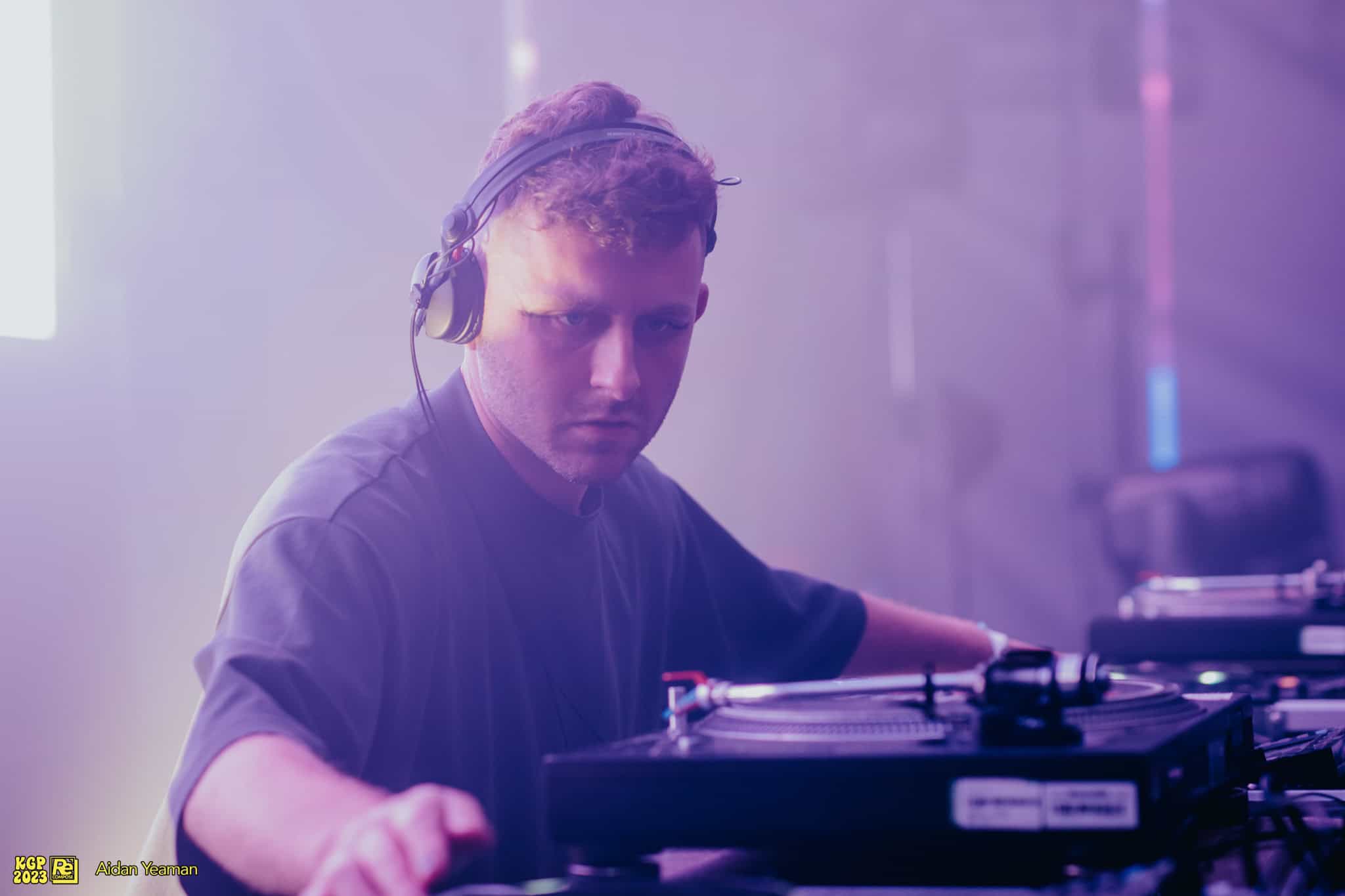
After packing out the Hometown Corner dub cave with his History of 140 set last summer, Skillis returns to Kelburn Garden Party this year with a 10 Years of Headset takeover. To mark the Edinburgh bass music staple’s birthday, Skillis curates The Landing on the Saturday night with a selection of essential Scottish DJs going b2b with some bona fide UK legends. We caught up with the label and party’s head honcho about his plans for the occasion, why he brought Gay Garage to Edinburgh, and the secret to building a long-lasting music community. Listen to the mixtape and read the Q&A with this local legend here.
Hi Skillis! Can you start by introducing your mix?
Hello! My mix features exclusively Headset label music, with a few sneaky forthcoming releases. Starting at 130, finishing at 170bpm. It’s the usual stripped back sound-system aesthetic across a range of styles. Artists include LWS, Nightwave, Neil Landstrumm, Kami-O, Creep Woland & many more amazing Scottish artists in need of a platform.
Could you share some of your early experiences with music and how you were introduced to dance music at the beginning?
My parents were into all kinds. My dad was into The Grateful Dead, Augustus Pablo, Gang Of Four, and my mother was into a wide variety of music. I was always around music from a young age – a cliche, I guess. When it came to electronic music, my first introduction was probably Daft Punk when I was really small, then I discovered Dizzee Rascal when I was 12. So the first UK dance music that I was really into was grime, which was interesting, because I was also figuring out I was gay at the time. From grime, I found dubstep, which became my first love. Anything stripped back and “less is more” music always caught my attention.
What was the moment that you decided you didn’t just want to just listen to it and you wanted to be in the middle of things instead?
I was always in the middle of it as soon as I was sneaking into raves at The Bongo when I was 15. I had a really good fake ID. I was always the keenest out of all my friends. We all loved it, but I was the nerdiest about it. Another group of friends, they were a year older than me, and one of them had turntables. I remember watching my mate DJ at his mum’s house and being like, “I could do that”. Vinyl is hard though, but because it was two records that I knew were the same tempo, I picked it up, and I just did it. My friends were like, “What the fuck?” From there, I got a lot of encouragement from friends. I didn’t really have the confidence to do anything until I came out the closet, which was a few years later. I feel like I wasn’t deciding that much, to be honest. I had lots of friends just being nice and pushing me. Yeah big up Oskans & Willi£ in particular.
How did you come to set up Headset?
Before that I was a resident at the legendary Bongo night Big & Bashy, and helping with the promotion. I was also working on the bar at The Bongo Club, so already in the middle of it all, learning and seeing the things you need to do to start a clubnight. I guess I saw gap in the market for actual Edinburgh/Scottish people. Edinburgh is weird. Creative people often leave quickly if they want to start something & make a living from it. People either move to Glasgow or London. Edinburgh is not set up for local people – for any contemporary culture, really. It’s set up for tourists and students and boomers. It’s like we’re not allowed to have our own culture outwith the festival, with those very strict licensing laws and the cost of living. It’s a tough city to do something with substance. But I stuck around, and it really paid off. Headset was busy from the first night, because there was just such a gap in the market and the Bongo were willing to give me a chance. So yeah, big up the Pete Ninetails & The Bongo Club.
What was the gap that you spotted in Edinburgh’s scene?
There was a gap for something honest for local people, and for something that was fresh and alternative to the traditional house & techno nights, or obnoxious “bass” events. Downstairs was billed asUKG, Techno and House, and upstairs was Old School Hip-Hop. Older heads were like, how does that work? How are you going to fit Jeff Mills and 21 Seconds To Go in the same night? But it was the newer sounds, the post-dubstep UK Techno thing, alongside the garage and UK funky revival that worked. Musically, it just seemed fresh at the time. I was able to introduce all this music to young people with a few amazing local DJs, and they weren’t a fussy crowd. Sometimes it would lean way more to techno and other times garage & bass, but they didn’t really care that much. They just enjoyed the fact that there was something for them. The first 5 years were nuts.
You just celebrated 10 years with a Headset Club Festival. What is the secret to creating a music community that lasts?
Just being nice to people and not letting your ego take over. Trying to be fair & firm with people and having a clear vision. The marketing of Headset also helped kick it off so quickly, which is a very basic concept & aesthetic. I never had a photographer, never had a videographer. It’s about creating a space where people can disconnect from normal life in an alternative reality, and creating a community where people see each-other every month. You can keep that rolling for years.
The Gay Garage night has become like an institution of itself. What inspired you to start that?
I always found it very hard to connect with my gay side, so this was a happy medium. The idea was to have an inclusive queer bass party. It’s a gay party for people that are more into Garage & Bass music and it filled another hole in the Edinburgh scene (no pun intended). It’s a concept that I borrowed from a London promoter called Twice Shy, who I actually booked for one of the first parties.
Do you feel that queer clubbing in Edinburgh and Scotland has evolved since you started promoting?
In Edinburgh, it was only really Hot Mess that was regularly doing the clubby underground thing. But now there’s a bunch of queer nights with a more club-focused music policy. I can only really speak for Edinburgh, because Glasgow has always got something going on. The Glasgow queer scene will never die. The underground scene in Glasgow will never die, even in the worst of times. There’s always going to be something going on there. I hope that never changes. Long live Glasgow!
You’ve started releasing music with Headset as a label now too. What are some Headset artists we should know about?
I’ve been putting out lesser know Scottish artists on vinyl as a sort of grassroots thing. We’ve got LWS, the UK techno wonder boy. As much as he’d cringe to hear me say that, it’s true. His productions are top of the pile for Ben UFO, Joy Orbison & more, they’re all playing his tunes. There’s also Creep Woland, who’s put out the most music on Headset, in a range of styles. And Feena will put out something eventually. She’s been so busy with EHFM, but she’s also a Headset resident. In total there are 10 records out, of stripped back music, sound system music – including ambient house, dub techno, all the way to jungle & hardcore. All Scottish artists or honorary Scots who’ve been in the scene for time.
You set up Midnight Bass back in 2017 too. What were you trying to bring to Edinburgh by introducing this midweek drum & bass night?
With the Bongo, I was working there at the time as PR manager. The way you really embed a place as somewhere to go in the community sense is by having a weekly night. I saw that there were tons of drum & bass DJs keen to play. I just took it upon myself, and was already friends with a lot of DJs from being out and about in the Cowgate and working there constantly. I thought I could put them all in one place and everyone could get a shot. It was a less serious music policy than Headset or SSL. Because it’s a weeknight, it was a bit freer.
You’ve since moved to Bristol – what are you up to down south?
Doing the odd Headset event here and in London. I moved to work at Idle Hands the record shop. I needed a change, and thought I’d stay in the UK and do more of the same in Bristol. It’s a totally different city. As a city, it’s obsessed with clubbing. As much as people say clubs are dying, Bristol is alive and well and there’s a million things going on. People are raving. People are up for it constantly. It’s mental.
Your History of 140 set went off last year. What do you think it is about those little rave caves that create those special moments for people?
It’s just the perfect size. Even if it’s 100 people, 200 people, it feels personal. What makes it special is the intimacy, especially in the context of playing 140 on a dub sound system like Hometown. The way it’s supposed to be!
And what can we expect from the 10 Years of Headset takeover this summer?
I’d say a lot of classics, and a few curveballs. I’ll leave it at that.
Finally, can you share a favourite memory of Kelburn?
I would say my first set at Kelburn, because I waited patiently for a shot, and Chris gave me an amazing slot. It was quite late on the main stage, and it went better than I could have ever hoped for.